A Desert Garden in Dubai That Drinks Responsibly
The default villa garden is a lawn on life support. There is another way to plant, one that takes its cues from the ghaf tree rather than the golf course.
, Dubai
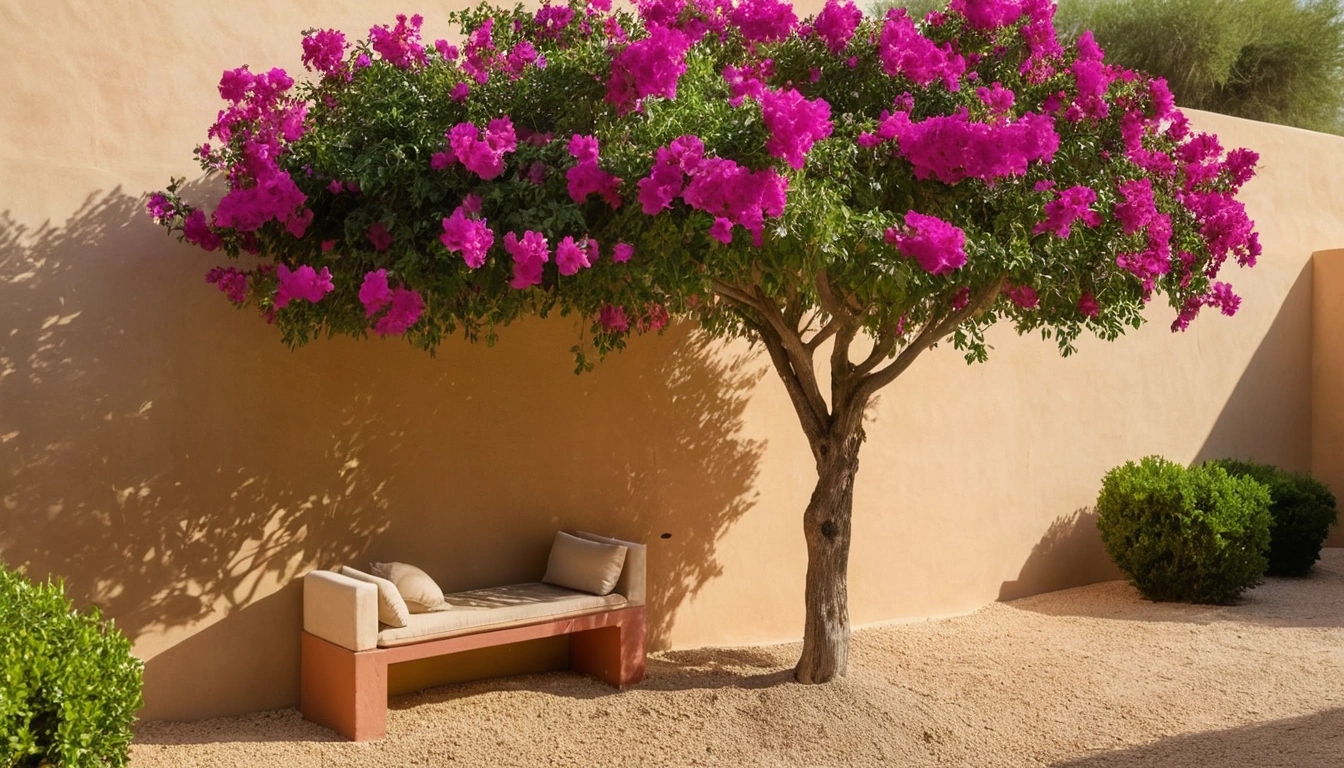
Every green thing in this city is a decision about water. The lawn, the hedge, the row of imported palms: each one is an ongoing subscription, paid in desalinated litres through the irrigation line. A desert garden in Dubai starts from the opposite premise. Instead of asking how much water a design needs, it asks how much garden a sensible amount of water can support, and the answer turns out to be: quite a lot, provided you choose plants that evolved for the neighbourhood and deliver the water as if it were expensive, which it is.
Start with what already grows here
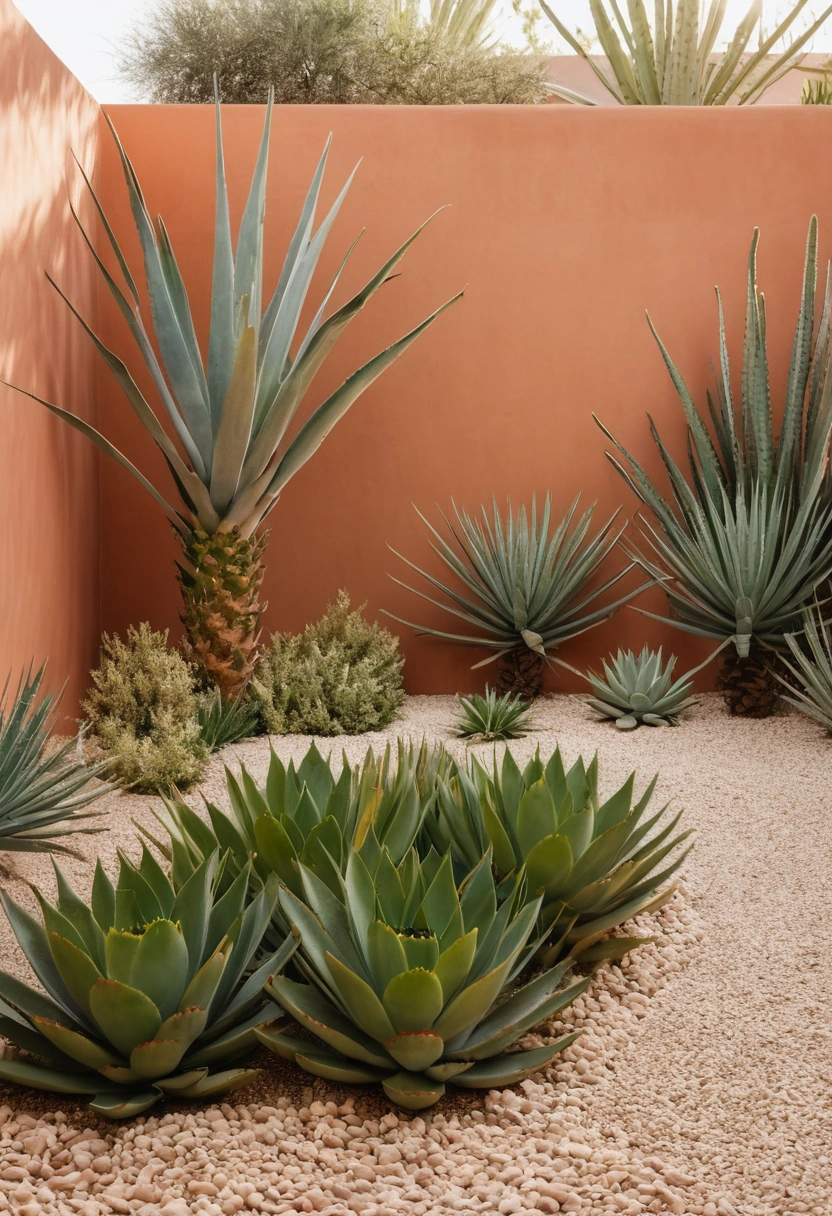
The ghaf, the UAE’s national tree, is the standing argument for native planting. It survives on very little once established, casts real shade and holds its own soil together. The sidr is its practical companion, tough, unfussy and generous with shade for its size. Around them sits a proven supporting cast: bougainvillea, which repays modest water with unreasonable quantities of colour; desert rose and frangipani for sculptural structure near seating; rosemary and other Mediterranean herbs where drainage is good; and agaves, aloes and their relatives used honestly. Honestly means admitting that not every succulent loves the coast. Plenty of desert cacti resent humid Gulf summers, so treat the succulent bed as an experiment you expand only when it works, not as a guaranteed carpet.
Native and adapted planting is not an aesthetic sacrifice. It is a different aesthetic, silver-greens and sculptural forms instead of wall-to-wall turf, and it sits naturally with the sand-and-stone tones that already suit the light here; the same instinct that builds a desert colour palette indoors works just as well in the ground.
Water the roots, not the sky
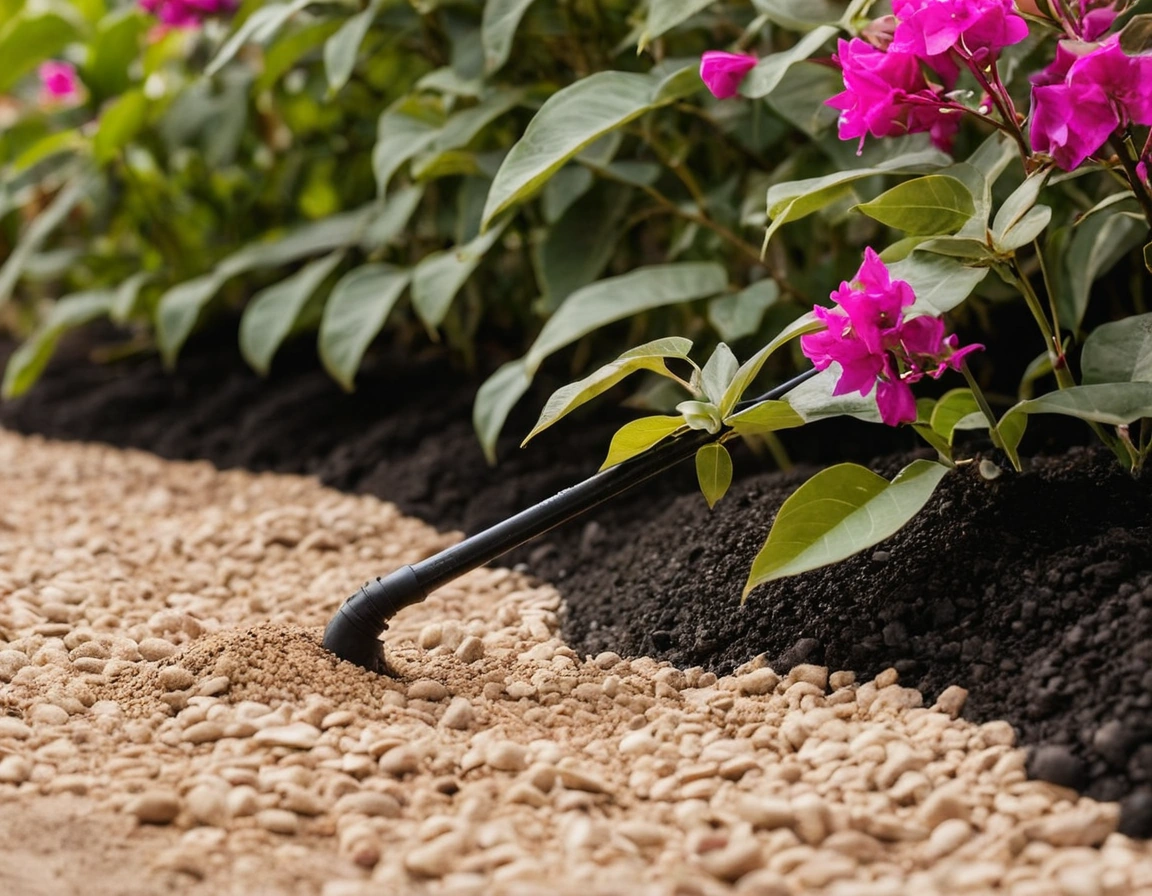
Spray irrigation in this climate is charity to the atmosphere. A meaningful share of every spray cycle evaporates before it reaches a root, and midday watering makes it worse. Drip lines change the arithmetic: water arrives slowly, at soil level, under mulch or gravel, where evaporation takes far less of it, and cycles run before dawn keep nearly all of what you pay for. Drip also waters the plant rather than the gaps between plants, which is half of weed control done for free.
Hydrozoning is the other half of the discipline. Group plants by thirst, then pipe each zone separately: succulents and established natives on one sparse circuit, flowering shrubs on a moderate one, and any small indulgence of green on its own line you can meter with a clear conscience. A garden where a cactus and a hibiscus share a valve is a garden where one of them is always suffering.
Shade is an irrigation strategy
Everything under shade drinks less. A canopy tree, a pergola, a wall’s afternoon shadow: each lowers soil temperature and slows evaporation, which means the cheapest way to save water is often to plant or build the shade first and fill in beneath it later. This is where garden design meets the building itself. Which side of the plot takes brutal western sun and which gets gentle morning light is set by how the house sits on its plot, and the planting plan should read that map: sun-proof species west, tender ones east and under canopy.
Courtyards take the idea further. An enclosed or semi-enclosed planted court holds a pocket of cooler, moister air, and greenery beside a small water surface can make evenings genuinely pleasant for weeks longer than an exposed terrace manages; the whole tradition behind the courtyard house and its microclimate is essentially shade and planting doing climate work. A modest court with a ghaf sapling, gravel and a shallow basin is a more useful luxury than a lawn twice its size.
Gravel, hardscape and the heat you keep
Hardscape earns its place by needing no water at all, but it can overdo things. A garden that is mostly pale gravel and paving throws heat and glare back at the house and at anyone sitting outside; a garden with no hardscape at all drinks too much. The workable balance keeps paving to paths and seating, uses gravel as mulch between plantings rather than as the show itself, and prefers light-but-not-white tones that neither bake nor blind. Permeable surfaces also let the rare rain soak in where it falls instead of sheeting into the street.
Containers deserve a line of their own, because pots dry out faster than beds and punish neglect quickly. Group them, shade them, put them on drip like everything else, and choose the same tolerant species; the logic is close to keeping plants alive under indoor air-conditioning, a matter of matching species to conditions rather than fighting them.
Grass, admitted honestly
Turf is the single thirstiest thing you can plant, and pretending otherwise is how water bills go wrong. That is an argument for honesty, not abolition. A small, deliberate carpet of grass where children play or bare feet actually land, watered by drip or subsurface lines and mowed high so it shades its own roots, is a defensible luxury. A default lawn covering every unplanted square metre is a standing order placed with the desalination plant.
Budget the garden the way the best ones are budgeted: shade and natives first, drip everywhere, hydrozones metered, hardscape in balance, and grass last, sized to its actual use. The result reads as generous rather than austere, stays green through August without heroics, and leaves the water bill looking like a utility, not a ransom.