The Curtain Question: Curtains and Blinds for Dubai Sun
Glass walls make Dubai flats bright and, from May to September, slightly punishing. Window treatments are the cheapest climate control you will ever buy; the trick is layering them properly.
, Dubai
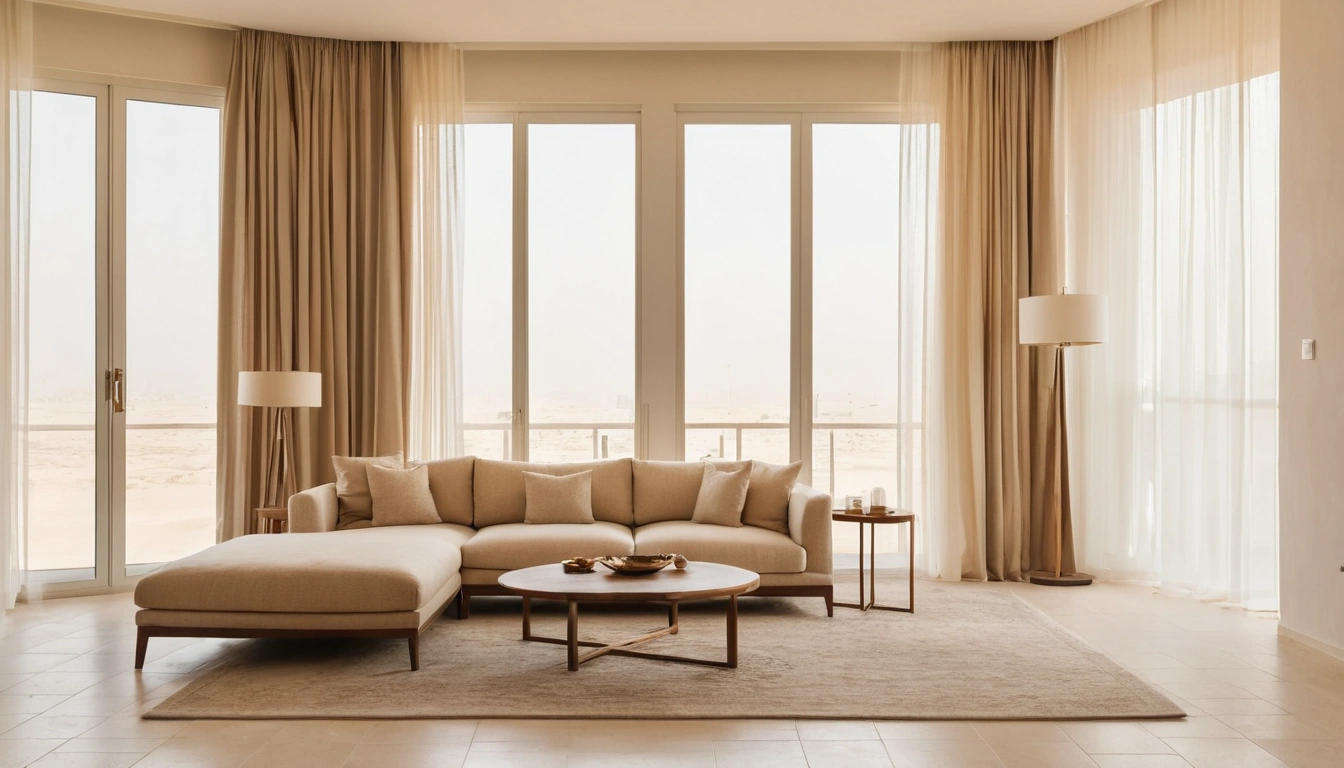
The developer gave you a wall of glass and called it a feature, which it is, until about eleven in the morning from May onwards. Choosing curtains and blinds for Dubai sun is less a decorating decision than the management of a heat source that happens to offer views. Layer the window properly and the flat runs cooler, the bedroom goes genuinely dark and the air-conditioning gets an easier afternoon; layer it wrong and you own some expensive fabric that glows like a lampshade while the sofa fades quietly underneath it.
What the Glass Lets Through
Sunlight through glazing arrives as light and stays as heat. Once radiation is inside the glass, most of it converts to warmth the AC then has to remove, so the cheapest place to stop the sun is at the window, and the best place of all is outside it. Orientation decides how hard the fight will be: east glass is a morning problem, south a steady one, and west the genuinely punishing case, delivering its peak load in late afternoon exactly when the day is hottest. The logic that governs how villas sit on their plots plays out in miniature at every window you own.
Fading is the quieter cost. A year of unfiltered Gulf light will visibly tire dark timber, rugs and upholstery near the glazing, which is why the sheer layer earns its keep even in rooms where heat is not the worry, and why your air-conditioning, already committed to a demanding service calendar, deserves whatever help the windows can give it.
Two Layers, Two Jobs
A sheer and a blackout, hung on separate tracks, remain the honest answer. The sheer works the day shift: it diffuses glare into usable light, keeps a soft-focus version of the view and provides daytime privacy in towers where the neighbouring block sits eighty metres away. The blackout works the extremes, sealing out the five-o’clock sunrise and cutting solar gain through the empty hours of the working day.
Linings are where budgets quietly diverge. A blackout coating stops light; a thermal lining or interlining resists heat; a good workroom can put both behind the same face fabric, and in a west-facing room the difference is something you can feel on the wall at six in the evening. Pale faces towards the glass reflect more than dark ones, which conveniently agrees with a restrained desert colour palette rather than arguing with it.
Rollers, Curtains, or Both
Roller blinds are the tidy option: flat, unfussy, happy in kitchens and available in true blackout fabrics. Their weakness is the edges, where light and heat slip past the gap between fabric and frame. Curtains lose the neatness and win nearly everything else: fuller coverage, generous overlaps, and a softness that hard local interiors of stone floors and painted plasterboard badly need, acoustically as much as visually. The practical answer is often both: a blackout roller doing the daily thermal work, curtains supplying the overlap, the acoustics and the sense that somebody finished the room.
Mounting decides more than fabric does. The shallow recesses common in local towers leave an in-recess blind leaking light down both sides, so fixing outside the recess, oversized by ten to fifteen centimetres on each flank and above, turns cover into coverage. Floor-to-ceiling glazing removes the wall above the window entirely, which means ceiling-fixed tracks, and it pays to establish early whether the ceiling near the glass is concrete or a plasterboard bulkhead hiding an AC duct: one takes a screw, the other takes planning.

Motorisation, Priced Honestly
Motors earn their money in three situations: spans too wide or heavy to draw evenly by hand, blinds marooned behind sofas and beds, and the scheduled early-afternoon close that shuts the west wall while you are still at work, which is the single most useful piece of automation a hot-climate flat can own. They earn nothing on a reachable bedroom window you touch twice a day; there the app is a toy at a furniture price. Expect a motor to cost roughly as much as the blind it moves, sometimes more. Battery motors recharge every few months and retrofit easily; wired ones want deciding during renovation, not after the painters have left.
The Satwa Route
Off-the-rack rarely fits floor-to-ceiling glass, which is how most people end up at a tailor. The fabric and tailoring streets of Satwa will make curtains to measure for a fraction of mall retail, and the process rewards specificity: bring exact measurements or ask for a measuring visit, name the lining you want out loud, blackout and thermal being different products, and hold a sample of the face fabric up in your actual light before committing to forty metres of it. Turnaround is usually quoted in days to a couple of weeks, faster than most retail lead times and negotiably cheaper.
A living room can tolerate a small light leak with grace. The bedroom cannot, and deserves stricter engineering of darkness than any other room in the flat, down to the channels the fabric runs in.

None of this is glamorous spending, and all of it is permanent climate control that keeps working through an afternoon nap and a power cut alike. The glass wall was always going to win the argument about the view; the fabric decides who wins the afternoon.