Sadu, Khoos, Gypsum: Emirati Craft in Interiors Today
Sadu, khoos and carved gypsum survived the concrete decades. Used at the right dose they give a contemporary Dubai interior a memory; used everywhere, they turn it into a lobby.
, Dubai
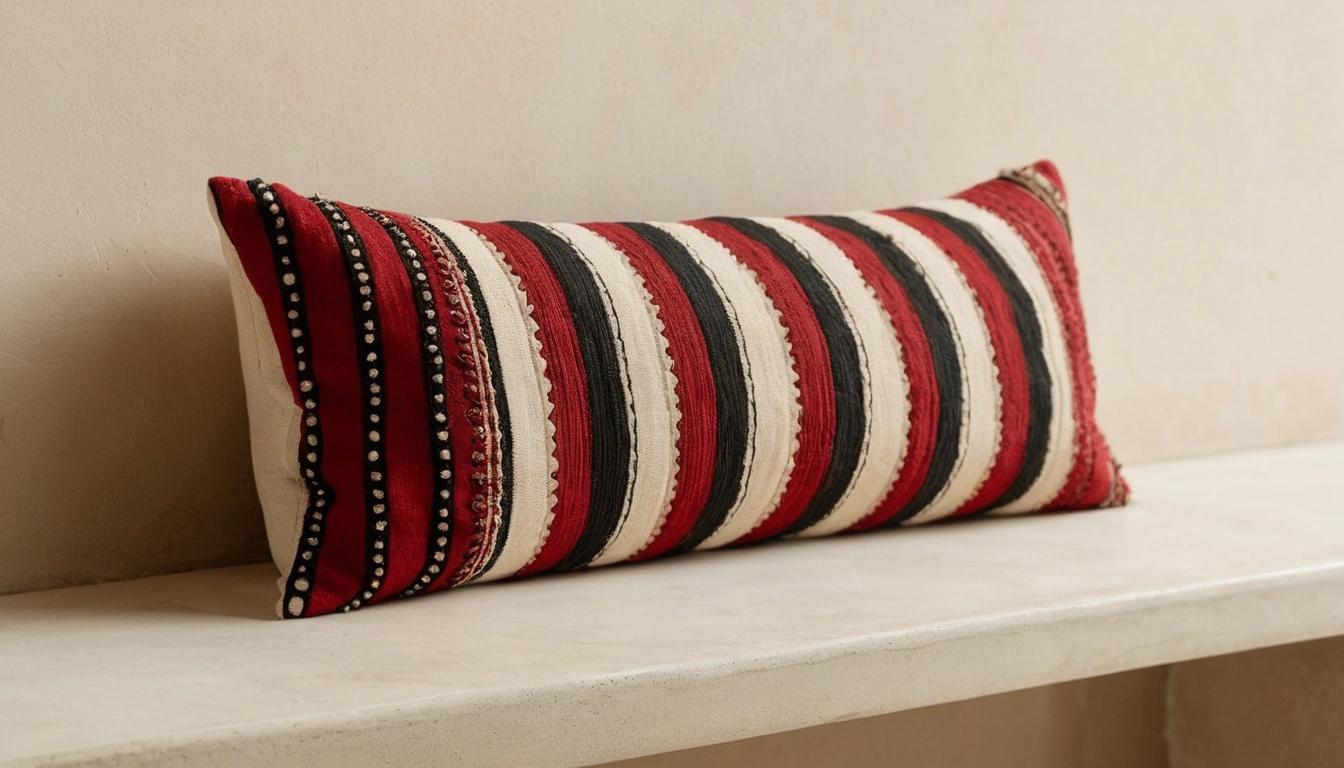
Long before the city had showrooms it had weavers, plaiters and plasterers. Sadu came off ground looms in wool patterned with narrow geometry; khoos turned palm fronds into mats, baskets and food covers; carved gypsum let light and air through the walls of coral-stone houses while keeping glare and eyes out. The question of Emirati craft in interiors today is not whether these traditions deserve a place in contemporary homes. It is dosage: how much, where, and in what form, before homage slides into theme park.
Three crafts, three textures
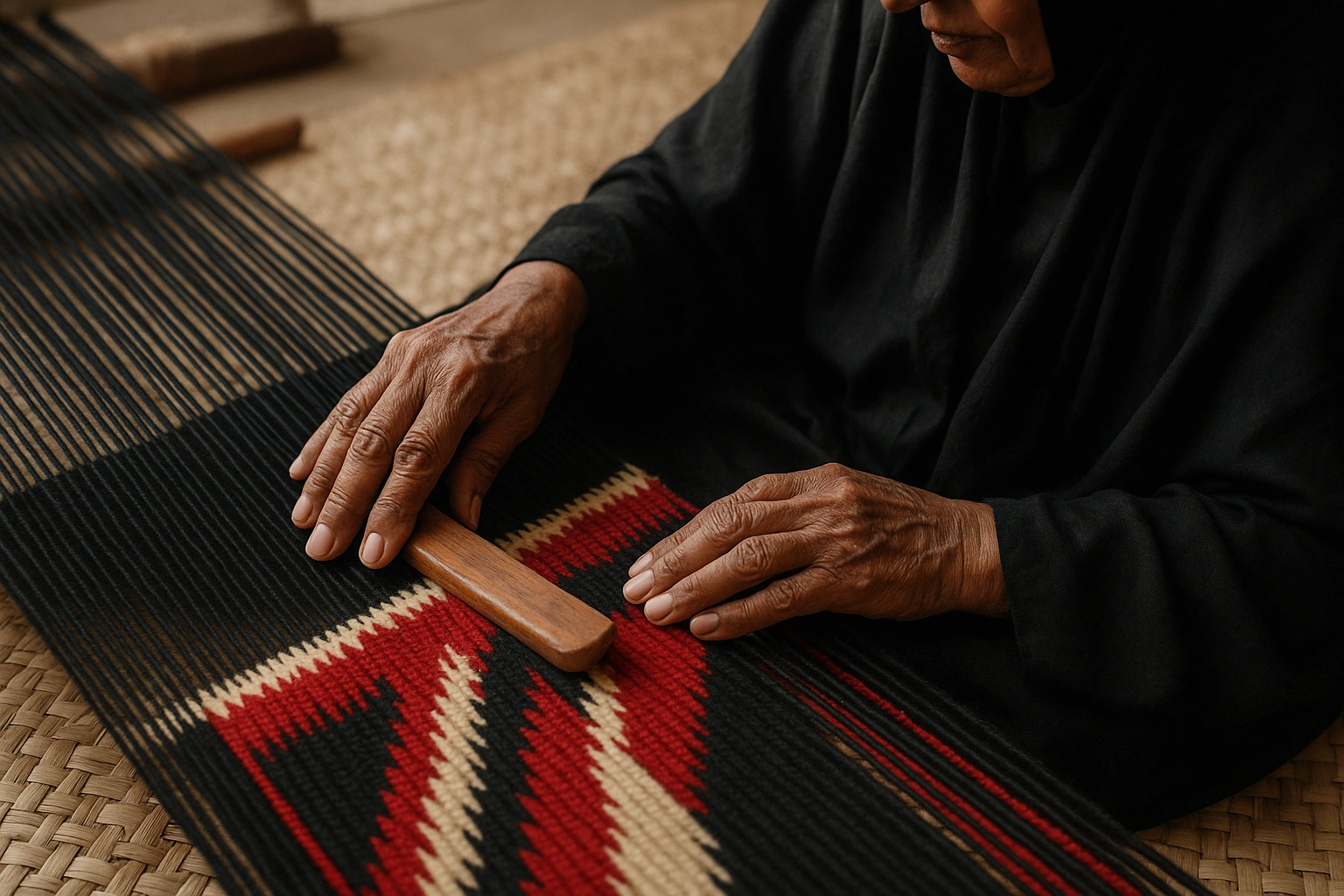
Sadu is the graphic one: warp-faced weaving, traditionally in red, black, white and orange, patterned in narrow geometric bands, and originally the fabric architecture of the tent itself. The craft is recognised by UNESCO as intangible heritage and survives through Emirati weavers working with heritage bodies and cultural foundations. Its language is the stripe and the band, which is exactly how it enters a modern room best.
Khoos is the humble one: palm-frond plaiting in long braids stitched into mats, baskets, fans and conical food covers. Its colour is the quiet gold of dried frond, sometimes dyed, and its gift to an interior is texture without weight or expense.
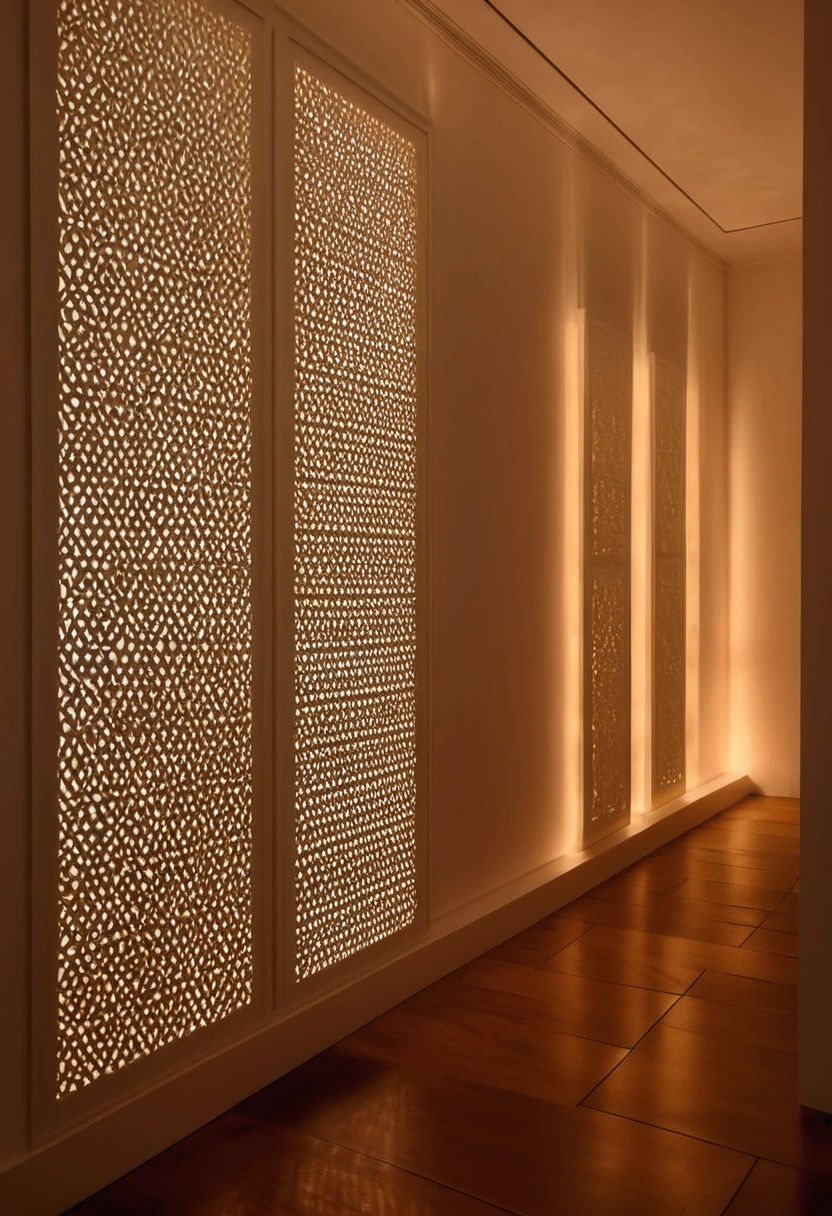
Gypsum is the architectural one. Carved and pierced plaster panels filtered light and moving air in the courtyard and barjeel houses, the same thinking that makes the wind tower’s lessons for modern homes worth revisiting, and older examples survive in the lanes of Al Fahidi. Geometric or floral, pierced or in relief, it is pattern with a job to do.
The distance between homage and hotel lobby
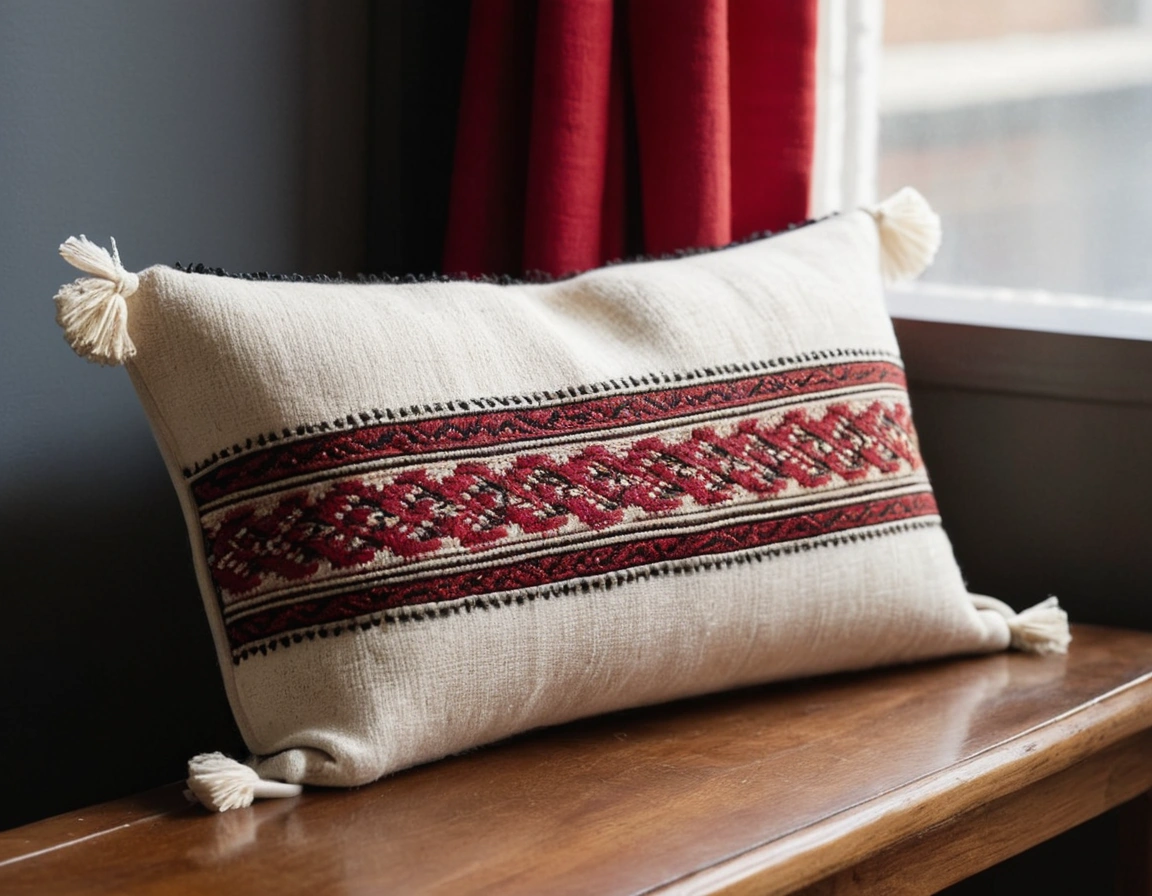
Pastiche happens when craft is used as wallpaper: sadu print on every cushion, khoos texture as laminate, gypsum motifs repeated by machine across an entire feature wall. The originals were never everywhere; a tent had its one patterned face, a house its few carved screens, and the restraint was part of the meaning. Machine-printed imitations of woven pattern are the fastest route to the lobby look, because the eye reads the difference between structure and surface even when the mind cannot name it.
Scale amplifies the error. A motif that reads as heritage at cushion size becomes scenography at wall size, and what a hotel can carry across a forty-metre lobby will crush a four-metre living room. Homes are not obliged to make a statement to passing trade; they are allowed one quiet reference that rewards the person who notices it.
The working rule is simple: real material, restrained quantity, calm background. One strong object in an otherwise quiet room carries more of the tradition than a themed corner ever will, which is the same argument made by mashrabiya and pattern used with restraint across the region’s whole design language.
Bands, panels, screens, single objects
Convincing entries are structural rather than decorative. A hand-woven sadu band as the trim of plain wool upholstery, or a single runner across a bench, sits naturally inside a contemporary majlis scheme without costuming it. Khoos works as framed panels, as trays corralling everyday objects, and as the honest layer in shelves styled around souk finds rather than bought props. Gypsum earns the largest role: a pierced screen as a room divider, a backlit panel in a corridor, a single carved frieze above a doorway, always as one deliberate gesture rather than a repeating motif.
Colour is the other lever. Traditional sadu reds and blacks are strong medicine in a pale contemporary scheme, and there is no shame in commissioning the same geometry in undyed wools, ivory, camel, charcoal, when the room needs quiet; weavers have always adjusted palettes to the buyer. Gypsum barely raises the question, since plaster white sits in any scheme, which partly explains why it is the easiest of the three to live with at scale.
Commissioning matters here too. Heritage programmes and cultural foundations connect weavers and carvers with buyers, and asking for a specific length of hand-woven band, or a panel made to a drawing, keeps money inside the tradition that produced the thing. A printed copy keeps only the look, and not for long.
Where the real thing lives
Seeing genuine examples calibrates the eye faster than any moodboard. The restored quarters of Al Fahidi hold carved gypsum in situ, in the light it was designed for; heritage villages and cultural foundations across the Emirates demonstrate sadu and khoos as living practice, often with the looms working in view; and the older souks of Deira, along with the craft stalls attached to heritage sites, sell honest palm-frond work for very little. Notice the irregularities, hand-drawn geometry, small variations in the weave, tool marks in the plaster, because those are precisely what the imitations lack.
Prices stay sane at the craft end. Honest khoos work often costs very little; hand-woven sadu is priced by the length and the labour in it, so a metre of genuine band costs real money and is worth it; carved gypsum panels are quoted by the piece and the drawing. If a price looks too good for handwork, it is machine work, and the room will eventually say so.
Bring that eye home and the rest follows. A band, a panel, a screen, one strong object; enough craft to give the room a memory, not so much that it becomes a costume. These traditions survived the concrete decades on merit, and the least a contemporary interior can do is use them as they were always used: precisely, sparingly and with a job to do.