The Case for Styling Shelves with Souk Finds
An empty shelf is not calm, it is unfurnished. Deira's alleys and the secondhand warehouses of Al Quoz supply better material than any decor aisle: objects with weight, age and a story you were there for.
, Dubai
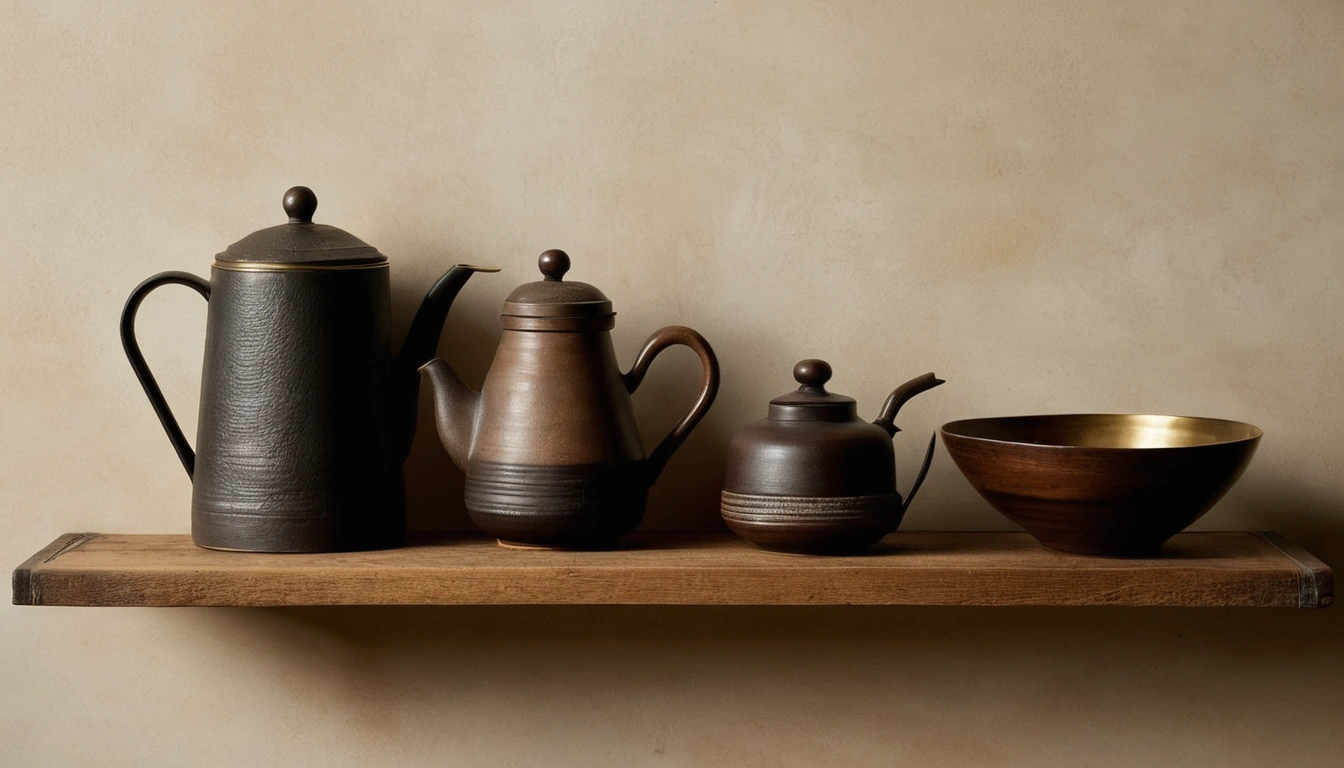
Somewhere in the last decade the empty shelf became a moral achievement. Three objects per metre, one of them a vase turned to hide its opening, the whole arrangement photographed from the doorway and never touched again. The look is called calm. It is closer to vacancy, and it carries a running cost: rooms styled this way need the architecture to do all the talking, and most flats have none to spare. Styling shelves with souk finds is the opposite proposition. It holds that a wall of objects with weight, age and origin furnishes a room better than any amount of careful absence, and that this city is unusually well supplied with the raw material.
The supply chain is half the pleasure. An hour in the alleys around Deira’s old souks turns up hand-beaten brass, carved boxes and trays with decades of polishing in them; the secondhand furniture warehouses of Al Quoz yield stranger cargo from house clearances across the Gulf; charity shops and the online resale listings do the rest. Little of it is expensive by furniture standards, and all of it arrives with the one quality no homeware chain can inject at the factory: evidence of a previous life.
What the Souks Actually Give You
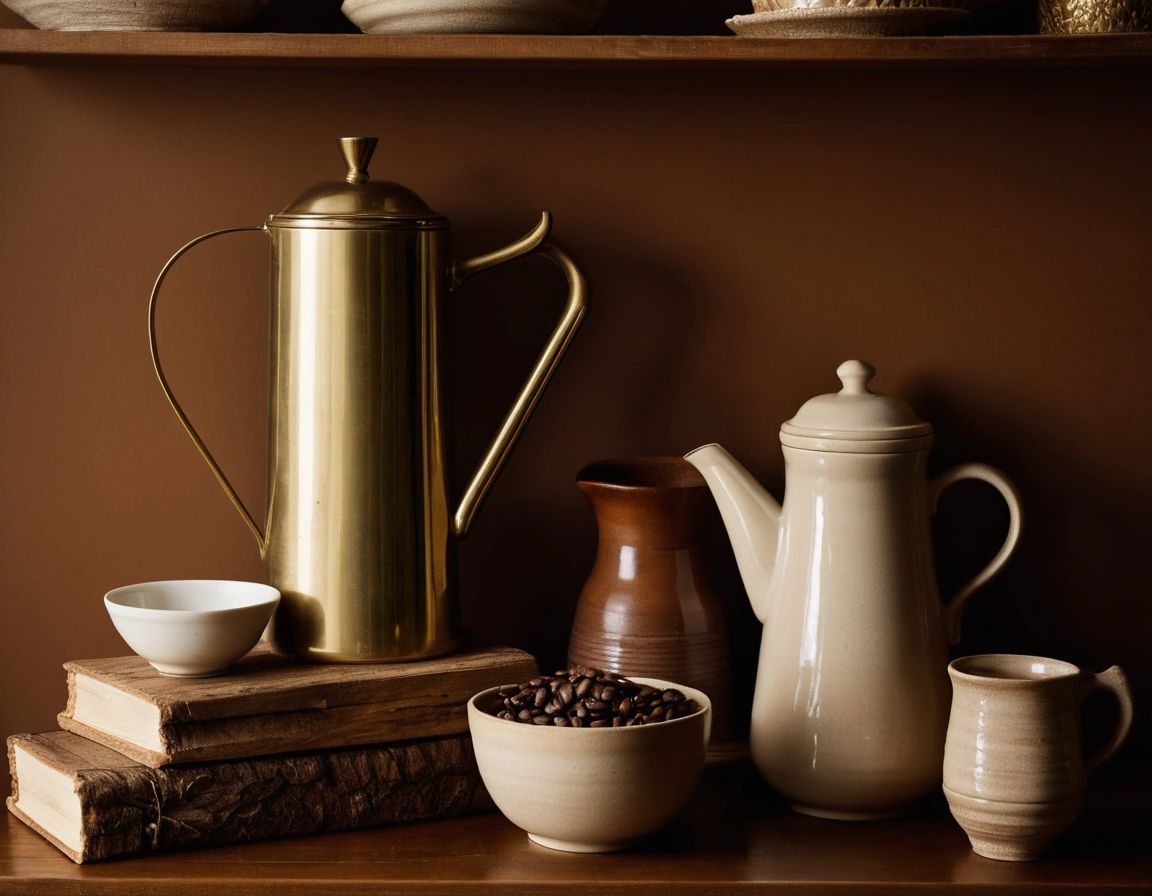
Brass leads the field. Dallahs, the long-beaked coffee pots, are the classic find, and they earn their popularity by being genuinely good objects: strong silhouette, warm metal, enough height to anchor a shelf on their own. Around them cluster trays, mortars, incense burners and hinged boxes, all of which group happily. Ceramics come next, hand-thrown bowls and dishes whose glazes sit naturally beside brass, and then textiles, woven and embroidered pieces that work hardest folded in a flat stack with their edges showing. Anyone drawn to the deeper background of the local material tradition will find it in sadu, khoos and gypsum work; the shelf is where that knowledge gets to live in a flat rather than be admired in a museum.
Buy for weight and silhouette, not for provenance stories. A seller’s account of an object’s age is unverifiable and mostly beside the point; what matters is whether the piece holds its own from three metres away, and whether you will still want to pick it up in a year.
Prices move with the hour and the buyer’s evident enthusiasm, so admire quietly, offer once, and be prepared to walk; the walk-away price is usually the real one. Condition matters less here than it does with furniture. Dents in brass read as history, a chipped glaze can face the wall, and a box that no longer quite closes will still hold keys. The only true rejects are shine and pretence: anything lacquered to look untouched, anything distressed by machine in a workshop last month. Honest patina is slow, uneven and impossible to fake convincingly, and the difference shows from across the room.
Loose Rules, Loosely Held
The styling conventions are real, and they should be handled like seasoning. Odd numbers group better than even ones, mostly. Varied heights beat a level skyline of same-sized objects, usually. One anchor piece per shelf keeps the rest from reading as scatter, and a hand-span of clear space between groups lets each one breathe. Hold all of it loosely: the moment the rules become visible, the shelf looks styled, which is the one outcome worth avoiding. A shelf should look accumulated, because it was.
A full wall also behaves best in quiet company: plain paint behind it, geometry handled with restraint elsewhere in the room, one lamp doing its job. The approach scales down surprisingly well too; even in a small one-bed, a single wall of proper shelving works harder than a sideboard and takes no floor area worth mourning. Add something alive at the end of a run, a pothos that shrugs off air-conditioning trailing past the spines, and the whole composition stops being a display and starts being a room.
Books as Insulation
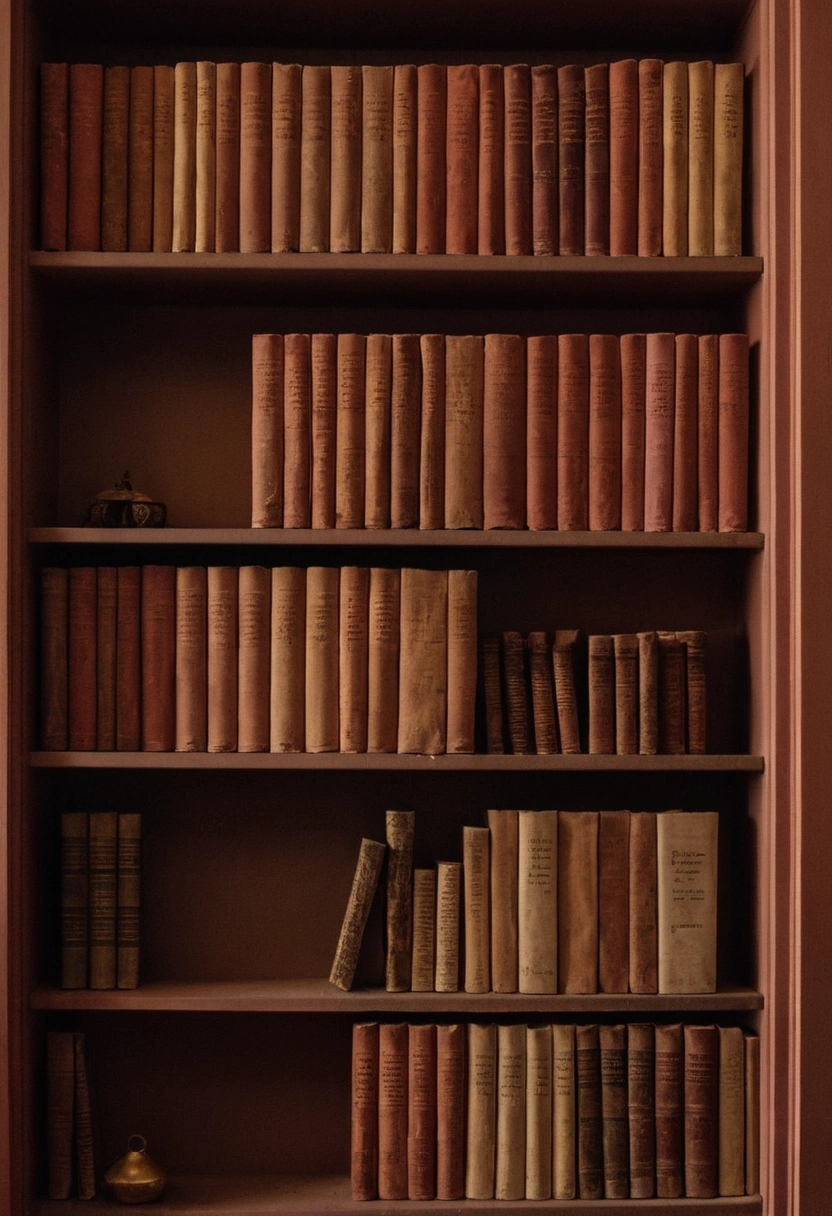
Books belong on these shelves in quantity, and not as decoration. Paperbacks with cracked spines, hardbacks with sun-faded jackets, the guidebook from a trip that went wrong: a shelf of books you have actually read is a diary that happens to absorb sound and soften a wall. Insulation for the soul is the honest description, and it is also, less romantically, insulation; a full bookcase deadens echo in tiled rooms better than most rugs.
Resist the two fashionable crimes. Spines turned inward make a wall of paper the colour of oatmeal and declare that you own books the way you own grout. Colour-coding is gentler but still taxidermy, arranging a library for the doorway rather than the reader. Shelve them the way you use them and let the mess mean something.
The Twice-a-Year Edit
Full shelves and clutter differ by exactly one habit. Twice a year, empty everything onto the table, dust the boards, and put back perhaps two-thirds of what came off. A box under the bed holds the reserve; things rotate back in when a shelf goes stale, move onward as gifts when they stop earning their place, or return to the resale listings they came from. The edit takes an evening and does more for a room than any purchase.
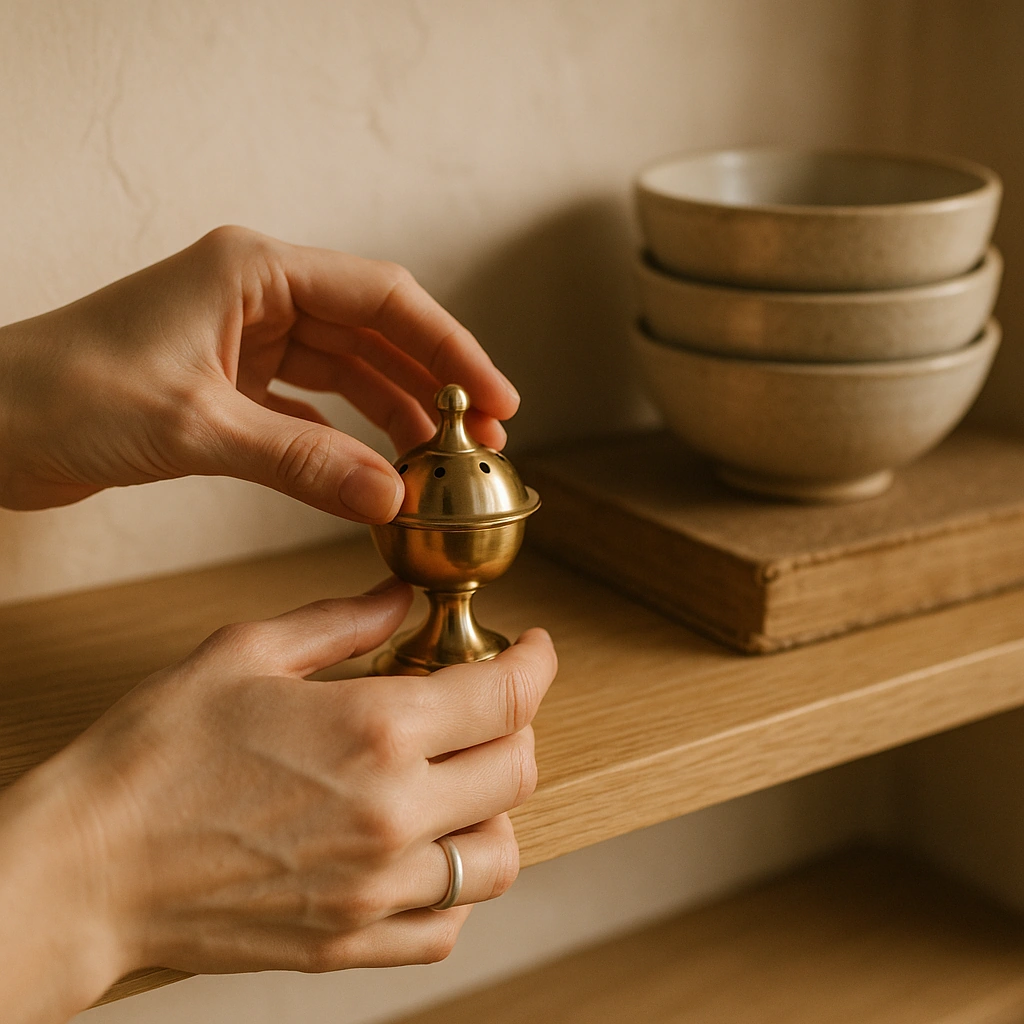
It is also when the collection improves, because handling every object twice a year teaches you what you actually like, and the next trip to Deira gets sharper for it. Nothing on the wall should be precious enough to survive every cull on sentiment alone; a piece that keeps its shelf for five years has earned the place several times over. The empty shelf will come back into fashion eventually; fashions do. A dallah bought on an ordinary Saturday, carried home on the Metro and set down next to your own books, was never in fashion, which is why it will not date.